Let’s be honest. Three or four years ago, many Ontario engineers and product teams were happily uploading files to overseas 3D printing platforms. The promise was seductive — instant quotes, competitive prices, and a slick interface that made ordering feel as easy as shopping online. What those platforms didn’t show in their marketing was the rest of the story: three weeks of waiting, unexpected customs charges, and a customer service experience that made you feel like a ticket number, not a client.
In 2026, that calculation has shifted. Ontario manufacturers, startups, and engineering firms are increasingly choosing local 3D printing service providers — not out of patriotism, but because the numbers, the timelines, and the quality simply make more sense closer to home.
DIRECT ANSWER
A local 3D printing service in Ontario delivers finished parts in 2–5 business days with no customs fees, direct engineering support, and full Canadian IP protection — compared to 3–6 weeks for overseas platforms once international shipping and import duties are factored in. For most Ontario projects, the total cost and turnaround of a local provider like Micro 3D Solutions in Richmond Hill is comparable or better than global alternatives.
The Real Cost of “Cheap” Overseas 3D Printing
Here’s a scenario that more Ontario engineers recognize than would admit it. You upload a part, get a quote for $60, approve it, and feel good. Then the part ships from overseas. Then it clears customs — or it doesn’t for a week. Then you pay $22 in brokerage fees nobody told you about. Then it arrives with a surface defect you can see from across the room, and the support conversation takes four days to resolve. By the time you’ve reprinted and reshipped, you’re six weeks in and $140 out of pocket.
That’s not a horror story. That’s a fairly standard experience for precision parts ordered internationally, and it’s exactly why the “local is more expensive” assumption has quietly collapsed among Ontario’s engineering community.
Ontario 3D Printing: Local vs. Overseas at a Glance
| Metric | Overseas Platform | Local Ontario Provider |
| Delivery to Ontario | 3–6 weeks (incl. customs) | 2–5 business days |
| Customs / Duties | Yes — often surprise fees | $0 — ships within Canada |
| Engineer Access | Support ticket / chatbot | Direct phone & email |
| IP Protection | Foreign jurisdiction | PIPEDA (Canadian law) |
| Rush Option | Usually not available | 48-hour rush available |
| Defect Resolution | Another 3-week reshipment | Reprint & redeliver locally |
What “Local” Actually Means for Your Project
Choosing a local Ontario 3D printing service isn’t just about faster delivery. It changes the entire nature of the engagement.
When your provider is 40 minutes down the highway in Richmond Hill rather than 14,000 kilometres away, you can call an engineer, explain the application, and get genuine advice about whether FDM is the right choice or whether SLS nylon would hold up better in your assembly. That conversation — which takes 10 minutes on the phone — saves you from ordering the wrong material and discovering the problem after the part arrives.
“The conversation you have before you print is worth more than any per-gram saving you think you’re getting from an overseas platform.”
Local providers also operate under Canadian privacy law. If you’re sending a CAD file of a part that represents months of engineering work, that file is your intellectual property. Uploading it to a server in another jurisdiction — with no signed NDA and no clear data retention policy — is a risk that many Ontario manufacturers are no longer willing to take, especially in aerospace, automotive, and medical device sectors.
Where Ontario’s Competitive Advantage Actually Lies
Ontario’s manufacturing industry — spanning automotive supply chains in Oshawa and Windsor, aerospace suppliers near Pearson, and a dense cluster of precision manufacturers across the GTA — runs on tight margins and tighter deadlines. In that environment, a three-week lead time isn’t a minor inconvenience. It can mean a delayed product launch, a missed production window, or a redesign cycle that starts over because the part arrived too late to test.
Local 3D printing service providers fill that gap in ways that global platforms structurally cannot. Industrial-grade Ontario providers operate production equipment 24 hours a day, conduct engineering reviews before a single layer is printed, and can have a replacement part in your hands before the customs paperwork on the original overseas shipment has even been filed.
ONTARIO MANUFACTURING CONTEXT
North America accounts for approximately 33% of global 3D printing market revenue. Canada’s 3D printing market is projected to reach USD $1.2 billion by 2030. Ontario — as Canada’s manufacturing heartland — drives the majority of Canadian 3D printing service demand, particularly from automotive, aerospace, and advanced manufacturing sectors.
What a Full-Service Ontario Provider Can Do That a Platform Can’t
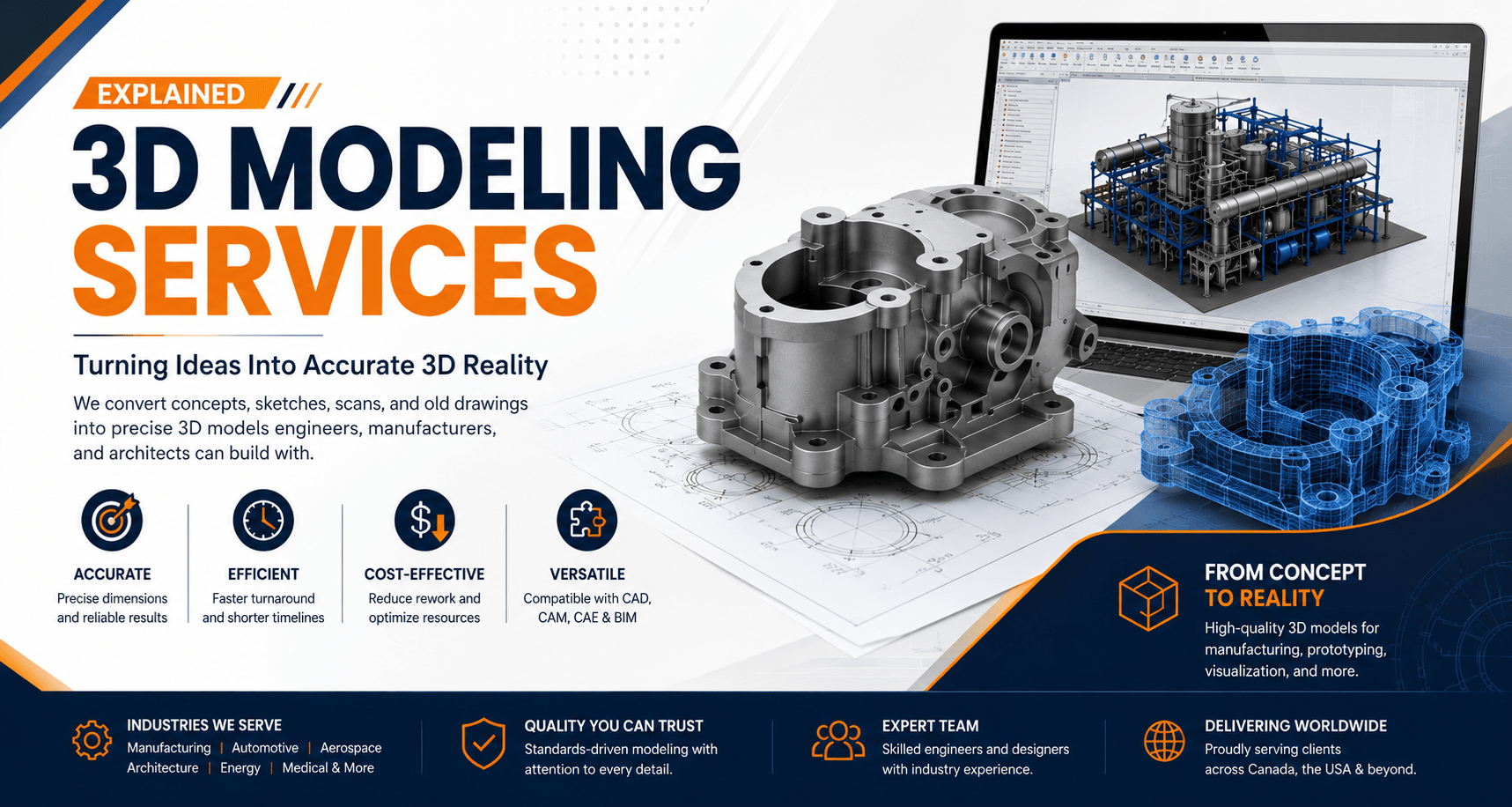
The services that matter most to Ontario engineers often aren’t even offered by overseas print platforms. Consider the situations that come up constantly in real manufacturing environments: you have a broken legacy part with no digital file. You have a 2D drawing from the 1990s that needs to become a printable 3D model. You have a structure that needs to be scanned, measured, and converted to a Revit BIM model for a renovation project.
None of those needs are served by uploading an STL to an online platform. They require engineers with scanning equipment, CAD expertise, and the experience to understand what you actually need rather than just what you’ve submitted.
At Micro 3D Solutions in Richmond Hill, that’s precisely where the full scope of services comes in:
- Blue light scanning, LiDAR, laser tracking, and underwater scanning
- Scan-to-CAD reverse engineering
- 2D-to-3D CAD conversion from legacy drawings
- Point Cloud to Mesh processing
- BIM modeling in Revit for as-built structures
- Dimensional inspection and quality verification
- 2D manufacturing drawings and BOM creation
ONE VENDOR ADVANTAGE
Managing a single Ontario provider for scanning, CAD, engineering drawings, and 3D printing compresses project timelines by eliminating handoffs, miscommunication between vendors, and the overhead of coordinating multiple quotes and purchase orders.
The Shift Is Already Happening
This isn’t a prediction — it’s already the reality. Industry experts note that 2026 marks a decisive shift for additive manufacturing from “what’s possible” to “what’s proven,” with success increasingly defined by execution and industrial integration. Ontario businesses are making exactly that calculation. The novelty of ordering from a global 3D printing platform has worn off. What replaces it is a preference for providers who know your industry, answer the phone, and stand behind their work.
If you’re in Ontario — whether you’re running an automotive supplier in Brampton, a med-tech startup in Mississauga, an architectural firm in Toronto, or an engineering consultancy anywhere in the GTA — a local 3D printing service is no longer the slower or more expensive option. It’s simply the smarter one.
Frequently Asked Questions
Why use a local Ontario 3D printing service instead of a global platform?
Local Ontario 3D printing services deliver in 2–5 days vs. 3–6 weeks for overseas, with no customs fees, direct engineer communication, Canadian IP protection under PIPEDA, and the option to visit the facility for complex or sensitive projects. For most Ontario orders, total cost — including shipping and import duties — is comparable or lower with a local provider.
How fast can I get 3D printed parts in Ontario?
Standard orders from a professional Ontario 3D printing service are delivered in 2–5 business days. Rush 48-hour turnaround is available at Micro 3D Solutions in Richmond Hill for qualifying projects. GTA clients can also arrange same-day pickup. This compares to 3–6 weeks for overseas platforms once international shipping and customs are included.
What can a full-service Ontario 3D printing provider do that an online platform can’t?
A full-service Ontario provider like Micro 3D Solutions offers on-site 3D scanning (blue light, LiDAR, laser tracking, underwater), Scan-to-CAD reverse engineering, 2D-to-3D CAD conversion, BIM modeling in Revit, dimensional inspection, and NDA-protected project confidentiality — all with direct engineering support from a local team.
Is the quality of local Ontario 3D printing as good as overseas services?
Industrial Ontario 3D printing providers use calibrated, production-grade machines and have engineers who review files before printing, conduct dimensional inspection on finished parts, and offer reprints when parts don’t meet specification. The accountability difference — calling a real engineer in Richmond Hill vs. submitting a support ticket overseas — is significant for any precision project.